For Australian businesses operating fleets of trucks, vans or company cars, speeding fines are a growing concern — both in terms of cost and safety. According to the Bureau of Infrastructure and Transport Research Economics (BITRE), speeding remains one of the leading causes of road fatalities in Australia, contributing to around 45% of fatal crashes nationwide.
Heavy vehicle drivers are particularly at risk. Data from the National Heavy Vehicle Regulator (NHVR) shows that a significant proportion of HGVs and light commercial vehicles exceed the speed limit, especially on rural and single-carriageway roads. This not only increases the risk of accidents but also exposes businesses to legal liabilities, vehicle downtime, and rising insurance premiums.
The legal consequences of speeding in a commercial vehicle
Every 1% increase in speed raises the risk of a crash by around 4% on Australian roads, according to research from the National Road Safety Partnership Program (NRSPP). Speed-related accidents can cause extensive damage to fleet vehicles, lead to costly repairs and towing expenses, and in severe cases, result in serious injuries or fatalities.
Beyond the physical and financial toll, drivers who exceed the speed limit in Australia face legal consequences. As outlined by Transport for NSW, penalties for speeding include substantial fines, loss of demerit points, potential licence suspension, and increased insurance premiums. For businesses managing fleets, repeated offences can also lead to higher operational costs, insurance hikes, and reputational damage.
Who pays company car speeding fines?
In Australia, the driver of the vehicle is generally responsible for paying any speeding fines incurred while driving a company vehicle. Speeding penalties are determined based on how fast the driver was travelling, the type of road, and whether they contest the offence in court. Drivers may face multiple consequences, including:
A fine : In Australia, speeding fines vary by state and depend on how much the driver exceeds the speed limit, with each state setting its own penalties.
| State/Territory | Speeding Fine Range | Demerit Points | Double Demerits |
|---|---|---|---|
| New South Wales | AUD $121 – $3,000+ | 2–8 points | Yes during specific period |
| Victoria | AUD $100 – $1,000+ | 1–6 points | No |
| Queensland | AUD $322 – $1,200+ | 2–7 points | Yes, for repeat offences within 12 months |
| South Australia | AUD $304 – $1,028+ | 2–5 points | No |
| Western Australia | AUD $100 – $1,500+ | 0–7 points | Yes during specific period |
| Tasmania | AUD $100 – $1,000+ | 1–6 points | No |
| Northern Territory | AUD $100 – $1,000+ | 1–6 points | No |
Demerit points : Penalty points are recorded on the driver’s licence and can affect both the driver’s record and the company’s insurance premiums. In NSW, for example, exceeding the speed limit by 10–20 km/h attracts 3 demerit points, while exceeding it by more than 45 km/h attracts 8 points. Accumulating too many points can lead to licence suspension.
Suspension & Disqualifications : Serious or repeated speeding offences can lead to a driver’s licence being suspended or disqualified for several months, after which state requirements must be met to reinstate it.
Who’s liable to pay HGV speeding fines?
Similar to company car speeding fines, the employee driving the heavy vehicle at the time of the offence is generally responsible for paying any fines. They may also face additional consequences such as demerit points or licence suspension, depending on the severity of the offence and the regulations in their state or territory.
Can companies be liable for accidents, injuries and fatalities?
In Australia, companies that operate fleets have a duty of care under workplace health and safety laws (e.g., the Work Health and Safety Act 2011 in most states). Employers are expected to take reasonable steps to prevent accidents and injuries, including maintaining vehicles, properly vetting drivers, and avoiding practices that encourage speeding or unsafe driving.
If a court finds that a company failed in these duties — for example, by neglecting vehicle maintenance, hiring unqualified drivers, or imposing unrealistic delivery schedules — the company can be held legally liable for accidents, injuries, or fatalities caused by its drivers.

The financial impact of HGV speeding penalties
While you won’t be required to pay a fine on behalf of a driver, your company can still suffer financial consequences for instances of speeding. From paying for vehicle repairs to facing a higher insurance premium when your term ends, here are a few costs you’ll have to pay if your drivers break the law:
The costs of speeding
Insurance premiums: Fleet insurance in Australia can be costly, and drivers with speeding offences on their record may cause your premiums to rise. Insurance providers may see habitual speeding as a higher risk, leading to increased renewal costs.
Vehicle maintenance: High speeds put extra strain on engines, tyres, brakes, and axles. Frequent speeding accelerates wear and tear, increasing the frequency and cost of maintenance and repairs.
Fuel consumption: Fuel efficiency decreases at higher speeds. Exceeding the most efficient speed for trucks (typically around 80 km/h for HGVs) results in significantly higher diesel consumption, increasing fuel costs for your fleet.
The costs of accidents
Towing and recovery: In the event of an accident, recovering and towing an HGV can be very expensive compared to smaller vehicles, especially for long-haul or urban routes.
Vehicle repairs: Accident repairs for heavy vehicles can be substantial. Making a claim may also raise your fleet insurance premiums.
Vehicle replacement: If a vehicle is written off, the cost of replacing it falls entirely on your company. Unlike smaller vehicles, resale of a damaged HGV may not offset any of the cost, making replacement a significant financial burden.
How can you prevent employees from speeding in a company vehicle?
While many factors that influence driver behaviour may be out of your control - there are ways you can help prevent employees from speeding in company vehicles. These measures include better education, route planning, longer deadlines and installing equipment such as dash cams, vehicle trackers and speed limiters. Here are a few ways that you can prevent your drivers from speeding in a commercial vehicle:
Install dash cams
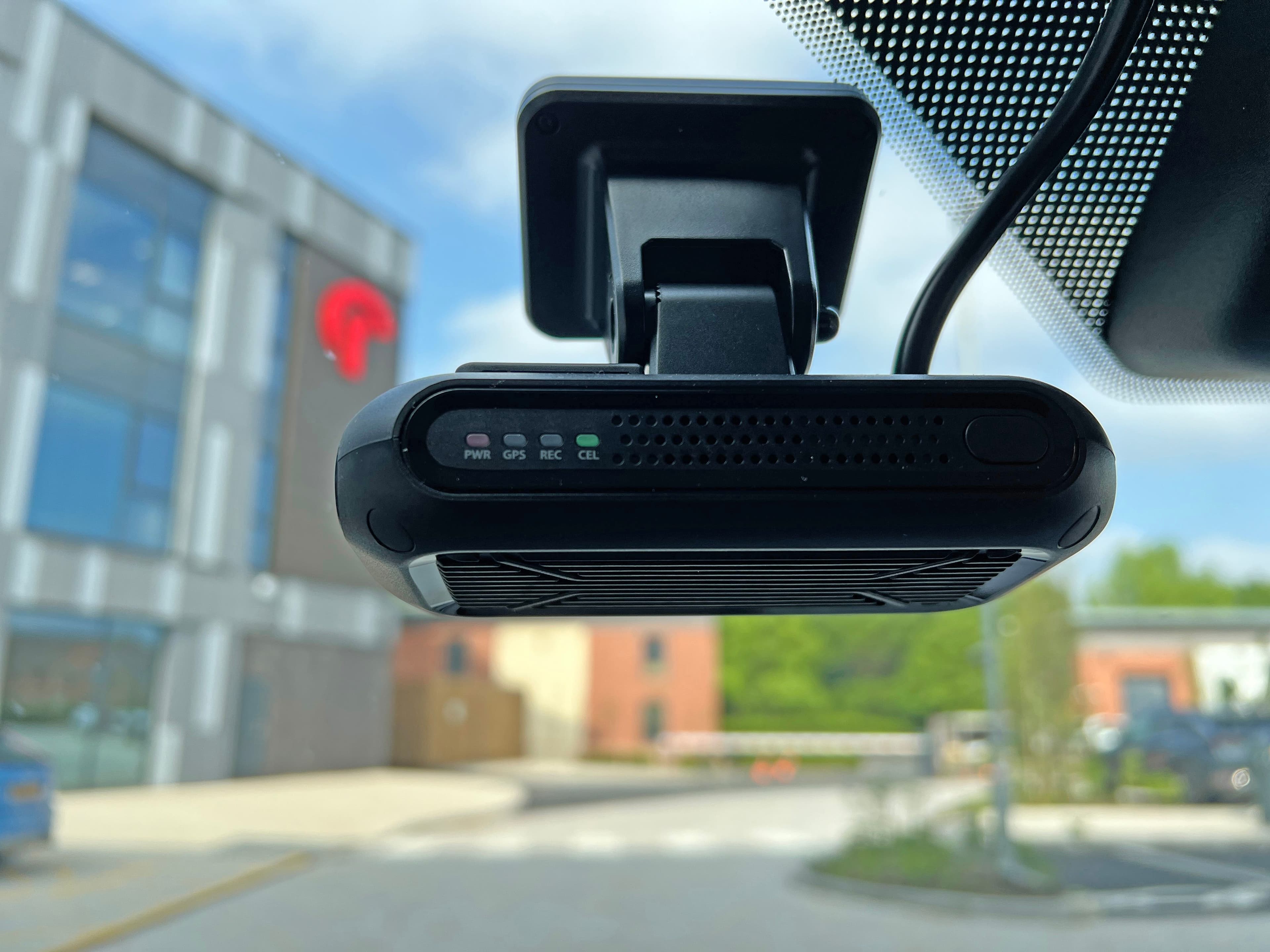
Installing dash cams is one of the best ways to improve driver behaviour. Insurance companies may even reduce a driver’s premium just for having one, showing that insurers have seen a considerable difference in the claim rate when a vehicle has a camera installed. A forward facing camera will help to monitor your driver’s behaviour on the road, while dual facing cameras can alert you to how distracted, frustrated or tired your employee is while driving. Dash cams also help to support insurance claims, for example if your driver was not at fault in a speeding-related accident.
Track your fleet
Another way for you to monitor the behaviour of your drivers is to track your fleet. With tracking tech installed, your vehicles’ routes, mileage, fuel consumption and journey history will be monitored and made accessible to you through the Kinesis vehicle tracking software. If your drivers are speeding or breaking road laws, fleet tracking will bring it to your attention in real time, helping you to address the issue before it escalates.
Use speed limiters
A speed limiter is a device fitted to a vehicle’s engine that monitors speed and restricts acceleration once a set limit is reached. In Australia, heavy vehicles (HGVs) over 12 tonnes are required by law to have speed limiters set to 100 km/h (or lower if specified). While speed limiters prevent vehicles from exceeding the national maximum speed, they cannot replace safe driving practices, such as reducing speed in residential or school zones.
Set appropriate deadlines
Time pressure is a major contributor to speeding in company vehicles and HGVs. Tight deadlines can unintentionally encourage drivers to speed. To promote safer driving, ensure that drivers have sufficient time to complete their routes, accounting for traffic, road conditions, and legal speed limits. Encouraging realistic schedules reduces the risk of speeding offences and improves overall fleet safety.n.
How can preventing HGV speeding benefit your company?
Commercial vehicle speeding fines aren’t the only problem to solve when your drivers are caught breaking the speed limit. Taking preventative measures can help reduce spending on maintenance and fuel, as well as prevent urgent repairs and towing costs. You shouldn’t stop there, however - if you’ve noticed that your drivers are speeding, it’s possible that there are a few other bad driving habits going on behind the scenes that should also be addressed.

Monitor vehicle speed with telematics
Kinesis telematics will alert you every time one of your vehicles exceeds the speed limit. Speak to one of our team about how we can help you monitor driver performance,