Every fleet manager wants drivers to return home safely at the end of every shift. Yet road incidents continue to cost Australian businesses billions of dollars each year through vehicle damage, insurance claims, lost productivity, workers' compensation, and legal liability. According to the Australian Government's road safety data, more than 1,300 people lose their lives on Australian roads annually, while tens of thousands more are seriously injured. Many of these incidents involve preventable behaviours, including speeding, fatigue, distraction, and poor vehicle maintenance.
For organisations operating fleets, driver safety is a legal, financial, and operational priority. Preventing vehicle downtime is critical, as unplanned fleet outages cost Australian businesses $760 to $1,180 per vehicle daily in lost productivity and repairs. Furthermore, reckless behaviour in branded vehicles directly damages public trust and brand reputation.
Australian fleets adopt fleet telematics systems for real-time vehicle tracking to improve driver safety, reduce fleet risk, prevent downtime, and protect brand reputation.
Why driver safety matters more than ever
The consequences of a road incident extend far beyond repair costs. When a company vehicle is involved in an accident, businesses may face:
- Vehicle downtime
- Missed customer commitments
- Increased insurance premiums
- Workers' compensation claims
- Legal expenses
- Reputational damage
- Regulatory investigations
Under the Australian Work Health and Safety framework, employers have a duty of care to ensure, so far as reasonably practicable, the health and safety of workers while they are performing their duties. For employees who spend significant time behind the wheel, that responsibility extends to managing driving-related risks.
For transport operators and heavy vehicle businesses, this duty of care also translates into strong operational expectations around safety, risk management, and compliance with relevant transport and workplace safety obligations.
The challenge is that many organisations still rely on reactive safety management. Risks are often identified only after an incident has occurred.
Telematics changes that approach by providing real-time and historical insights into driver behaviour, vehicle use, and potential risk factors, enabling more proactive safety management.
From reactive to proactive safety management
Historically, fleet managers relied on incident reports, customer complaints and manual inspections to understand driver performance.
The problem is obvious: by the time an issue is identified, the damage may already be done.
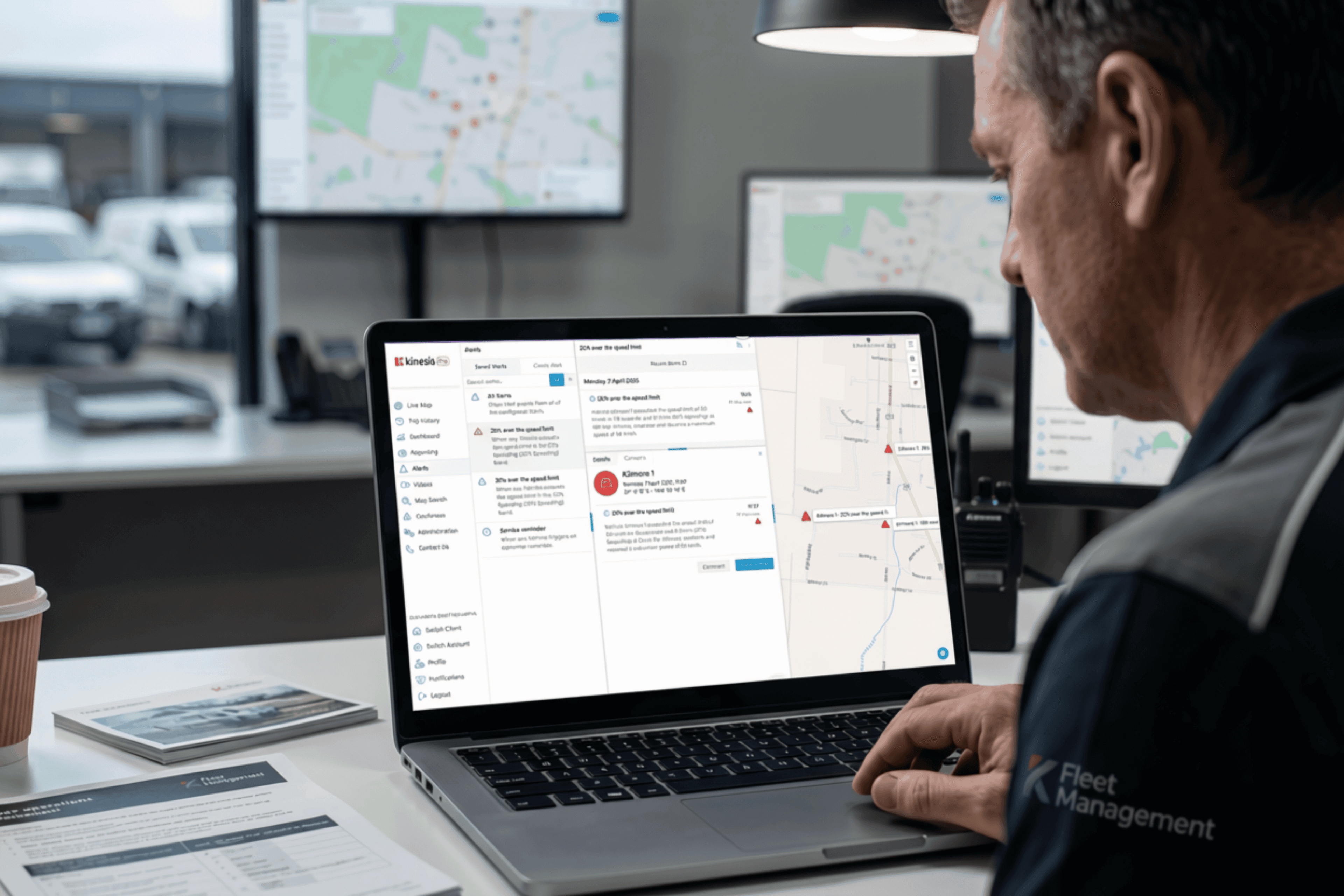
Telematics provides real-time visibility into how vehicles are being driven every day. Rather than waiting for an incident to occur, fleet managers can identify emerging risks before they become costly accidents.
This shift from reactive management to proactive intervention is one of the biggest reasons telematics has become a core fleet safety tool.
The driver behaviour most commonly linked to fleet incidents
Research consistently shows that driver behaviour is one of the largest contributors to road incidents.
Speeding contributes to around 30% of all fatal crashes across Australia, with driving just 5km/h over the speed limit in urban areas doubling the risk of a crash. Fatigue continues to be a significant concern, particularly within transport, logistics and field service industries.
Over time, many organisations achieve measurable improvements in driving behaviour because drivers become more aware of how they operate vehicles. Research shows that smooth, eco-friendly driving habits can improve fuel efficiency by up to 30% and lower overall vehicle maintenance and wear.
When a driver exceeds a speed threshold, brakes repeatedly and aggressively, or spends excessive hours behind the wheel, fleet managers receive immediate alerts. Rather than relying on assumptions, businesses gain real-time data to prevent accidents, reduce operational costs, and boost productivity. In fact, fleets that actively monitor and coach driver behaviour achieve over 20% in accident-related cost savings and reduce insurance premiums by an average of 13%.
This allows safety conversations to become constructive coaching opportunities rather than disciplinary discussions.
Every journey generates data that helps fleet managers refine operational habits and eliminate high-risk driving patterns across their fleet.
Fatigue management and compliance
Fatigue remains one of the most difficult risks for fleet operators to manage.
Unlike speeding, fatigue is not always visible until it becomes dangerous.
For businesses operating heavy vehicles, fatigue management is closely linked to fleet management and broader compliance obligations. Monitoring driving hours, work schedules, and rest periods is essential for reducing risk and maintaining safe operating standards.
Telematics provides greater oversight of vehicle usage patterns and driver activity, helping fleet managers identify situations where fatigue risks may be increasing.
Armed with real-time data, managers can proactively adjust shift scheduling, prevent driver exhaustion, and maintain safer, more efficient fleet operations.

Vehicle safety starts with vehicle health
Driver safety and operational efficiency depend heavily on vehicle condition. A poorly maintained vehicle introduces major safety hazards on the road, even when operated by the most cautious drivers.
The true financial impact of vehicle neglect lies in how repairs happen: reactive emergency repairs cost 3 to 5 times more than scheduled maintenance. Additionally, unmonitored driving habits like severe cornering and hard braking accelerate wear on high-cost consumables, wearing through tyres and brake pads up to 40% faster.
Telematics continuously monitors engine diagnostics, battery levels, and fault codes in real time. This gives fleet managers early visibility into minor mechanical issues so they can resolve them before they turn into roadside breakdowns or expensive component failures.
By shifting from reactive repairs to predictive maintenance, businesses keep drivers safe, extend vehicle lifespans, and protect the resale value of their fleet.
The financial impact of safer driving
Many Australian businesses initially invest in fleet telematics software and GPS vehicle tracking to streamline route planning and improve daily operational efficiency.
What often surprises fleet managers is how rapidly proactive driver safety improvements translate into bottom-line ROI.
Cultivating safer driving habits across your workforce leads directly to fewer road incidents, reduced vehicle wear and tear, lower fuel consumption, and significant maintenance cost savings.
Furthermore, commercial fleet insurance providers increasingly reward organisations that implement fleet risk management technology and real-time driver behaviour monitoring, helping secure better terms during policy renewals and claims assessments.
The end result is a high-performing commercial fleet that is safer, more resilient, and far more cost-effective to operate.
Why is telematics becoming essential for Australian fleets?
As regulatory expectations tighten and operational costs rise, telematics has shifted from an optional add-on to a critical management tool for Australian businesses.
Vehicle incidents remain the single largest cause of work-related fatalities in Australia, with Safe Work Australia reporting that at least 66% of all worker fatalities involve a vehicle. At the same time, workplace health and safety laws treat the driver's seat as a legal workplace, placing a direct duty of care on employers to proactively manage on-road risks.
Beyond safety, the operational return on investment (ROI) is driving rapid adoption. According to industry fleet research:
- 70% of Australian businesses report reducing overall fleet costs after deploying GPS tracking and telematics.
- 57% of fleet operators achieve noticeable improvements in daily productivity.
- Over half of fleets achieve a positive financial ROI within 12 months of implementation.
By integrating real-time tracking, risk management, and predictive maintenance, Australian fleet operators can protect their workforce, streamline daily operations, and control running costs in a single platform.
Learn more about our Kinesis Pro software and how it can help you better manage your fleet and support your business operations.

Kinesis telematics software transforms fleet safety and driver behavior
Speak to one of our team to find out more about how telematics can help you monitor your fleet and reduce costs.