
Fleet tracking providers help businesses reduce costs by turning vehicle data into decisions that cut six expenses: fuel, wasted miles, crashes, unplanned repairs, theft and admin time. A telematics device reports where each vehicle is and how it is driven as well as other key telemetry data that helps flag in it’s software flags where money is leaking.
In short, tracking saves money by:
- Cutting fuel spend through less idling, less speeding, and fewer unnecessary miles
- Optimizing routes and dispatch so the nearest driver takes the job and empty miles fall
- Possibly lowering crash and insurance costs by coaching risky driving behaviour
- Helping to prevent breakdowns with MPG performance and mileage- or hour-based maintenance
- Recovering stolen vehicles and equipment with live location and geofence alerts
- Automating admin and compliance such as mileage logs
The stakes are rising. The American Transportation Research Institute (ATRI) found it cost a record $2.336 per mile to operate a truck in 2025, up 3.4% on 2024, with repair and maintenance up 8.6%. Below, Radius Telematics explains how each cost lever works, what the US benchmarks say, and how to measure your own return.
1. How does fleet tracking reduce fuel costs?
Fleet tracking reduces fuel costs by exposing the three habits that burn the most fuel for no return: idling, speeding and unnecessary miles. Fuel is usually the single largest variable cost a fleet can influence day to day.
Idling is the easiest win. According to Argonne National Laboratory for the US Department of Energy, an idling heavy-duty truck burns about 0.8 gallons of fuel an hour, and a typical long-haul truck idles around 1,800 hours a year, using roughly 1,500 gallons of diesel. At an illustrative $3.50 a gallon, that is about $5,250 per truck per year spent standing still. The same DOE fact sheet notes that many fleets have significantly reduced idling using telematics data on engine status and idle events.
How Radius Telematics helps fleets cut fuel spend:
- Idle alerts and reports show which vehicles, drivers and sites idle most, so managers coach the drivers that need it most
- Speed and harsh-acceleration data pinpoint driving styles that push fuel economy down
- Mileage and route history reveals unauthorized trips and out-of-hours use
2. How does route optimization lower fleet costs?
Route optimization lowers costs by cutting the miles, hours and overtime it takes to complete the same jobs. Every mile avoided saves fuel, tire wear, maintenance and driver wages at once.
The ATRI 2026 cost study identifies deadhead (empty) mileage as potentially the single greatest drain on operating costs, with non-tank deadhead running at 16.5% of miles in 2025. Driver wages and benefits alone averaged about $1.03 per mile, so any mile removed from a route is worth far more than its fuel.
Live GPS tracking cuts wasted miles in three ways: Nearest-vehicle dispatch: send the closest available driver to a new or urgent job instead of the next one on the list Planned vs. actual reporting: compare the route a driver took with the route planned, and fix recurring detours Accurate ETAs and proof of visit: fewer "where's my driver?" calls and fewer disputed or repeat visits
3. How does driver behavior monitoring reduce costs?
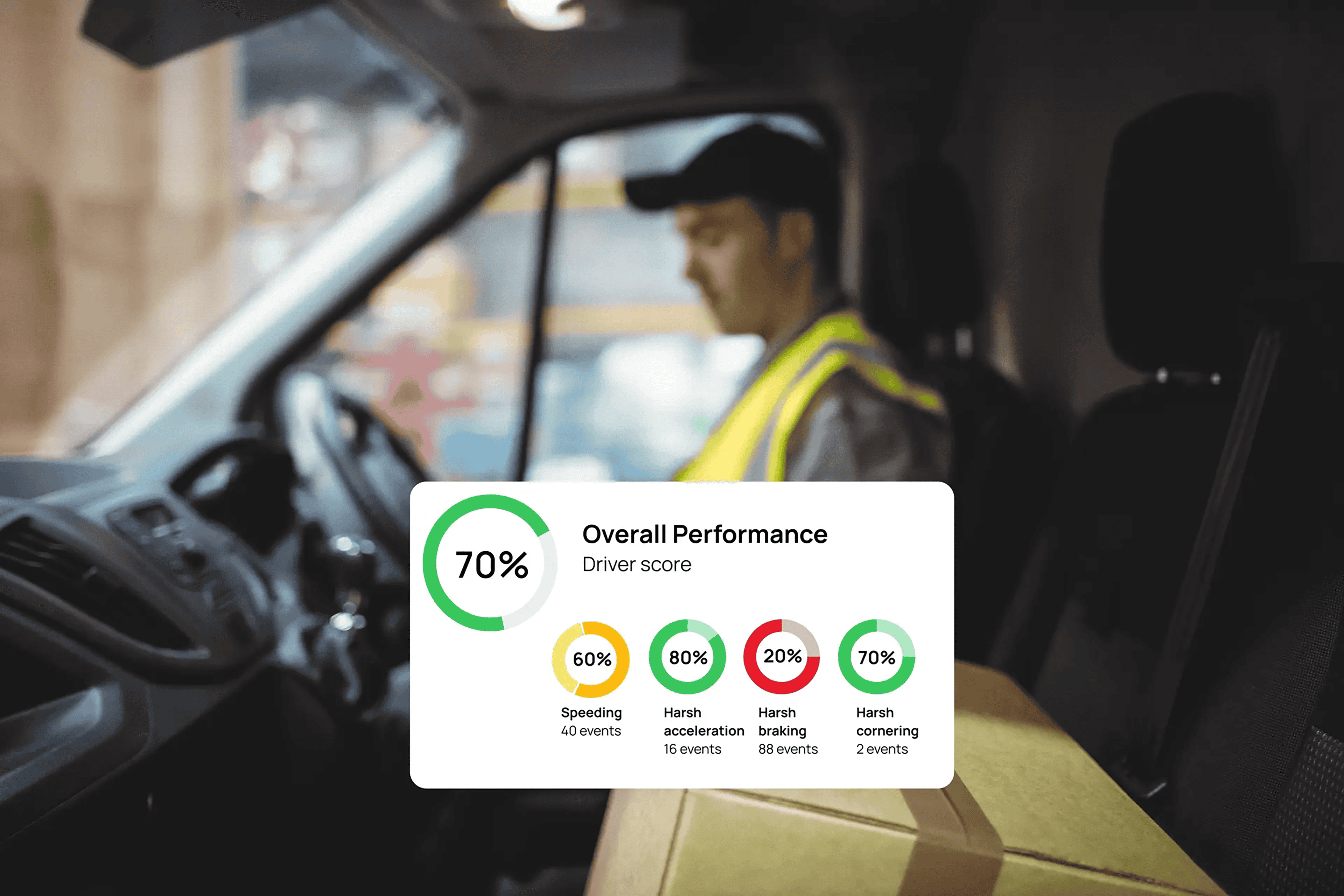
Driver behavior monitoring reduces costs by preventing crashes, and crashes are among the most expensive events a fleet faces. Telematics and fleet dash cams detect speeding, harsh braking, harsh cornering and distraction, so managers can coach the specific drivers and habits behind the risk.
The Network of Employers for Traffic Safety (NETS), as reported by Automotive Fleet, estimates motor vehicle crashes cost US employers $61.7 billion in 2023, of which $35.3 billion came from on-the-job crashes. Its per-crash benchmarks:
| On-the-job crash type | Average cost to employer (2024 $) |
| Fatality | $927,276 |
| Injury (fatal or nonfatal) | $180,199 |
| Any crash | $55,772 |
| Property damage only | $11,794 |
NETS attributes $16.2 billion of employer crash costs to distracted driving and $6.7 billion to speed-related crashes, both behaviors telematics can measure.
Fewer incidents also give fleets evidence to take to their insurer at renewal; ATRI reports truck insurance averaged 10.6 cents per mile in 2025, up 23.9% since 2021.
4. How does fleet tracking cut maintenance costs and downtime?
Fleet tracking cuts maintenance costs by helping managers to schedule service on actual usage and catching faults before they become breakdowns. A planned repair in the shop is almost always cheaper than a roadside failure, a tow, a missed job and a vehicle off the road.
Maintenance is one of the fastest-rising costs in US fleets. ATRI puts repair and maintenance at 21.5 cents per mile in 2025, up 8.6% in a year, partly because fleets are running older equipment for longer. Idling makes it worse: where warranties and service intervals are based on engine hours, every idle hour adds wear without adding miles, as the DOE idling fact sheet points out.
With telematics, maintenance moves from the calendar to the vehicle:
- Utilization data shows which vehicles are overworked and which sit idle, so wear is spread evenly
5. How does GPS tracking reduce theft and improve asset utilization?
GPS tracking reduces theft costs by helping fleets recover stolen vehicles and equipment quickly, and it improves utilization by showing which assets earn their keep. Both protect capital that would otherwise sit on the balance sheet doing nothing, or disappear.
Vehicle theft has fallen, but it has not gone away. The National Insurance Crime Bureau (NICB), via Insurance Journal, reports 659,880 vehicles stolen in the US in 2025, with the Chevrolet Silverado 1500 and Ford F-150, both common fleet pickups, in the ten most stolen models.
Tracking limits the damage in several ways:
- Live location to assist recovery support so police can act on accurate location data.
- Geofence and out-of-hours alerts when a vehicle or trailer leaves a yard or job site unexpectedly
- Asset trackers for trailers, plant and tools, which are high-value, easy to move and often uninsured for their full replacement cost
- Utilization reports that help managers identify underused vehicles to redeploy or sell, so the fleet is right-sized
6. How does telematics reduce admin and compliance costs?
Telematics reduces admin costs by replacing manual logs, timesheets and phone calls with data that records itself. The saving is office hours, payroll accuracy and fewer compliance penalties.
Common admin savings include:
- Automatic timesheets and job records: start, stop and on-site times come from the vehicle, cutting payroll disputes and overtime padding
- Mileage logs: accurate business vs. personal mileage for reimbursement and tax reporting
- Fewer check-in calls: dispatchers see where everyone is instead of phoning drivers
Visibility is the starting point, not the saving itself. The real value comes when fleet managers use that information to make practical changes, whether that means tackling unnecessary idling, improving dispatch decisions or planning maintenance around vehicle usage. Start with a clear baseline and a few priorities, then measure what changes.
Matthew Guy, Head of Sales - US
How to measure the ROI of fleet tracking
Measure fleet tracking ROI by setting a baseline before rollout and tracking the same few numbers every month afterward. Savings vary by fleet type, so your own data is the only reliable benchmark.
1. Baseline: record fuel spend per mile, idle hours per vehicle, crashes and claims, unplanned repairs, and admin hours for 3 months
2. Pick two or three targets: most fleets start with idling and speeding because results show within weeks
3. Coach, then compare: share reports with drivers, recognize improvement, and compare each month with the baseline
4. Add up the levers: fuel saved + crashes avoided + downtime avoided + admin hours saved, minus the subscription cost
As a worked example using the Argonne idling figures above: cutting idling by 20% on a truck that idles 1,800 hours a year saves about 290 gallons, or roughly $1,000 a year at $3.50 a gallon, before any savings on maintenance, routing or safety.
What to look for in a fleet tracking provider
The right provider is the one whose data your team will actually act on. Look for:
- Coaching data such as driver scores built in, not just alerts, so behavior changes and stays changed
- Reports in plain language that a busy operations manager can use in five minutes
- Coverage for vehicles, trailers and equipment on one platform
Radius Telematics can help US fleets reduce costs associated with fuel spend, admin and efficiency to better control costs.
Sources
- ATRI, Analysis of the Operational Costs of Trucking: 2026 Update, July 2026, as summarized by The Trucker
- US DOE / Argonne National Laboratory, Long-Haul Truck Idling Burns Up Profits, fact sheet
- NETS, Costs of Motor Vehicle Crashes to Employers (2026), as summarized by Automotive Fleet
- NICB 2025 Vehicle Theft Report, via Insurance Journal, March 2026

Make your fleet more cost-efficient
Use Radius fleet tracking to identify inefficiencies, manage vehicles more effectively, and keep operating costs under control.
Frequently asked questions
Can’t find an answer to your question? Talk to the Radius customer support team at 888-278-9781. We’re here to help you with any questions or concerns.