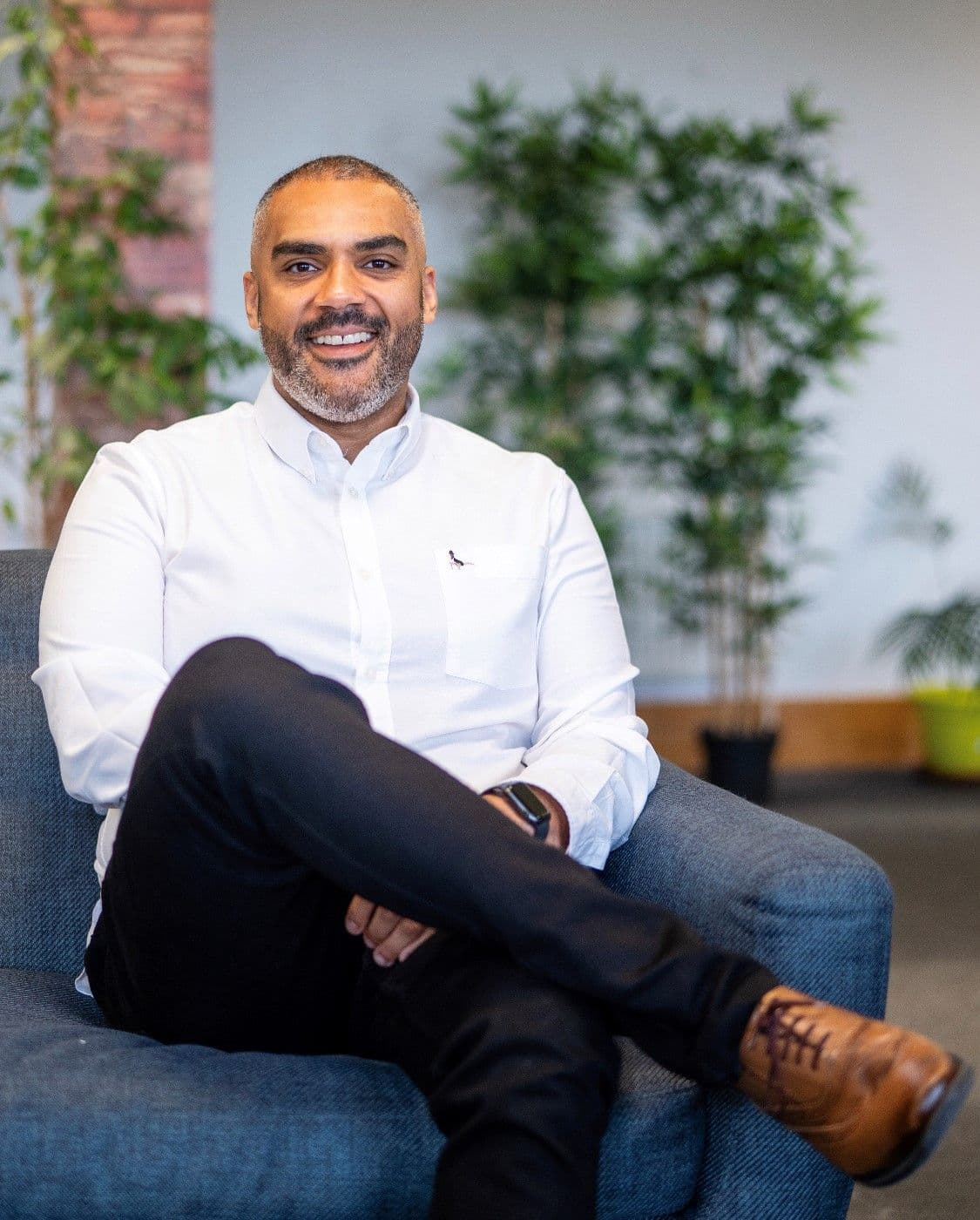
Continuing our ‘Inside Telecoms’ series, Harry Bishop, Director of Account Management at Radius, shares his experience across both telecoms and IT, discussing the industry’s evolution, the challenges of convergence, and the opportunities this blended model creates for customers.
Blurred lines
I’m often asked if telecommunications accurately represent what Radius does today. My response, though controversial, is that it absolutely does not.
Over the past few years, the traditional boundaries between telecommunications and IT have increasingly blurred as telecom networks have become more software-driven and IT has become more network-centric.
Historically, telcos focused on dedicated hardware, proprietary systems, and voice connectivity, while IT focused on computing, applications, and data running on standard servers. Today, those distinctions are much less clear.
Key changes that I believe have blurred the lines between telecommunications and IT include...
- Network Visualisation: Cloud technologies have replaced specialised telco hardware with software running on standard IT infrastructure and cloud platforms, making telco networks look and operate more like IT systems.
- 5G and edge computing: Modern networks are tightly integrated with IT platforms to support low latency, data processing, and application hosting at the edge. Telcos now provide compute and cloud-like services, not just connectivity.
- DevOps and automation: Telcos have adopted IT practices such as CI/CD pipelines, APIs, containerisation, and DevOps. These enable faster service deployment and continuous updates, similar to how IT applications are developed and managed.
- Convergence of services: Telcos increasingly offer IT services such as cloud hosting, cybersecurity, IoT platforms, and managed services, while IT companies and cloud providers now offer network services traditionally provided by telcos.
- Common skillsets and tools: Roles now require hybrid skills across networking, software engineering, and cloud platforms. For example, network engineers increasingly work with code, automation tools, and cloud environments.
As a result of these changes, telcos are evolving into digital service providers, whilst IT is becoming more network aware. The boundary between telco and IT is no longer defined by hardware vs. software, but instead by integrated, software-based platforms delivering connectivity, compute, and digital services together.
The journey from connectivity to business problems
With boundaries between telco and IT shifting, customers now ask telcos to solve end-to-end digital and business problems that were traditionally owned by IT. Examples include cloud computing, cybersecurity, data analytics and IoT platforms, reflecting a shift where telcos are expected to combine networks, cloud, software, and managed services to support business outcomes rather than just network uptime.
Skills and mindsets needed in a blended Telco and IT environment
A blended telco and IT environment requires account management teams to move beyond selling mobile and connectivity to solution-led, consultative selling. Critical skills needed to achieve this include cloud and software literacy, understanding customer business processes, and the ability to position integrated network, cloud, security, and digital solutions.
Equally important is the mindset shift toward outcome-based value, long-term partnerships, roadmap-driven and cross-functional collaboration, rather than product-centric, transactional sales.
Looking ahead
Having previously been in both telecommunications and the IT MSP and MSSP space, I see vast opportunity ahead for both our customers and the industry. The shift from a pure telco model to a blended telco-and-IT approach significantly expands strategic influence and growth potential, positioning telcos at the centre of the customers’ digital transformation journeys.
For me, this shift transforms my role from selling commoditised connectivity to delivering results for clients through owning higher-value, solution-led relationships that address customers’ specific needs. It enables more meaningful conversations at an executive level, where technology decisions are directly tied to business strategy, resilience, and growth. By bringing together connectivity, cloud, security, and industry-specific solutions, the role becomes one that delivers long-term value for customers and the organisation.
If you want to find out more about how Radius can help your business leverage both telco and IT services, get in touch with us on 0330 818 5000.

Looking for smarter telecoms solutions?
From business mobiles to cloud communications, connectivity, and IT & security, we provide flexible solutions that keep your business connected and secure.
Harry Bishop has been at Radius since 2025 and is now Director of Account Management. With over 14 years of experience in IT, Cyber and Telecoms, he combines deep technical expertise with a people-first leadership style to drive strong client relationships, growth and strategic direction.