
As more businesses add electric cars and vans, public charging becomes part of everyday fleet management. According to SMMT electric vehicle registration data, UK battery-electric car registrations rose by 28.7% in the first seven months of 2026 compared with the same period in 2025. Radius recorded a 100% increase in the volume of electricity (kilowatt-hours, kWh) supplied through its EV charge cards between August 2025 and August 2026.
EV charge cards can help businesses manage this transition. Drivers have a consistent way to pay for compatible public charging. Fleet and finance teams gain clearer records of charging activity and costs.
What is an EV charge card?
An EV charge card is a physical card used to start and stop charging at a compatible public charge point. It is linked to an account, so the business is billed instead of the driver paying personally.
Some cards only work with one charging operator. Multi-network cards work across several participating networks. This can reduce the number of cards and apps that drivers need.
Some multi-network charge cards use roaming agreements to give drivers access to participating charge points operated by different networks.
Businesses should check the provider's public EV charging network to confirm coverage along regular routes and near key destinations.
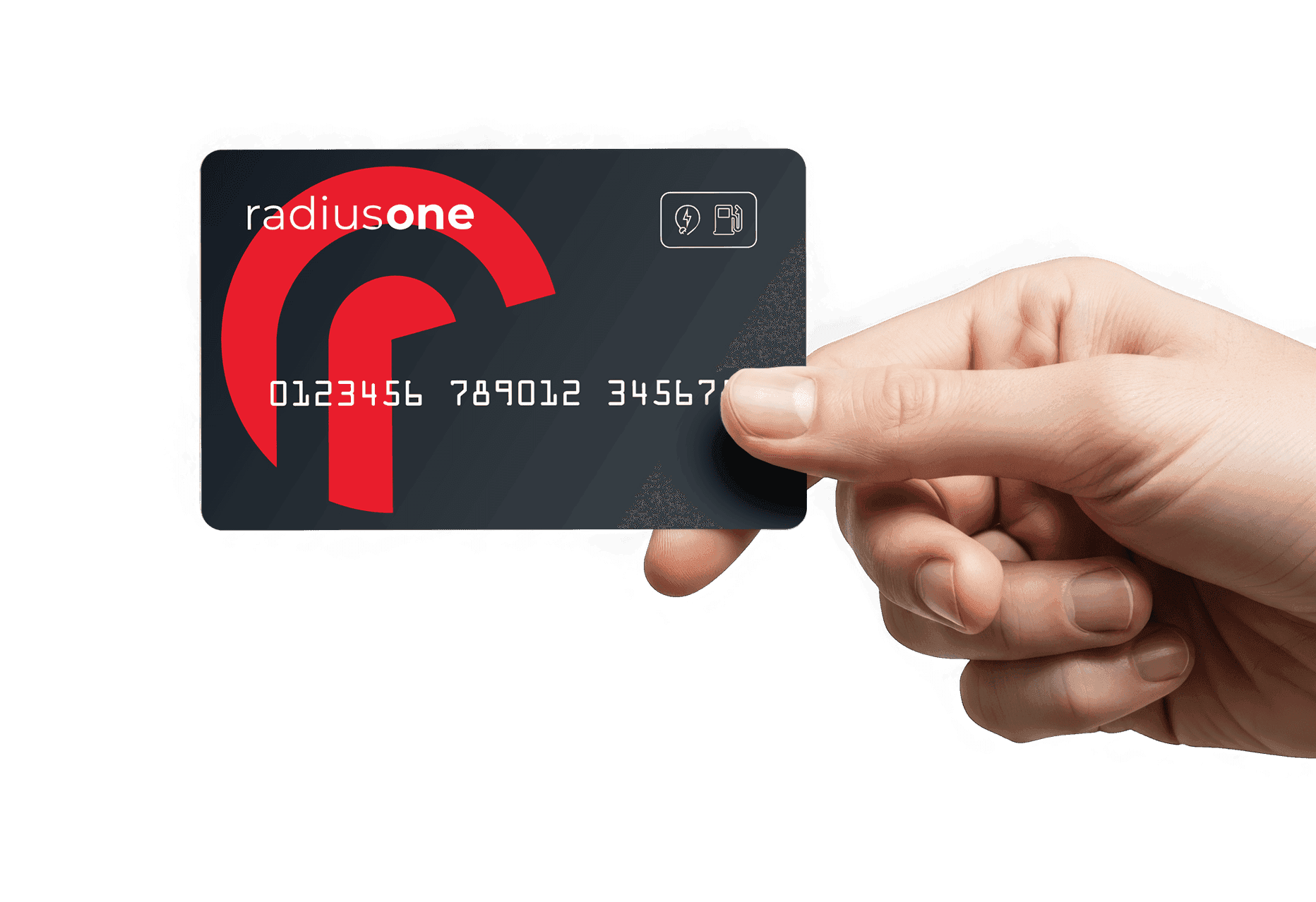
Radius One is built for business and mixed fleets. It supports EV charging and conventional refuelling with a single card. Drivers can access more than 48,000 EV charging points and over 4,700 fuel stations across the UK.
What is an RFID card for EV charging?
RFID stands for radio-frequency identification. The charge card contains a chip that communicates with an RFID reader on a compatible charger.
The driver taps the card on the reader. The charger checks the card and authorises the session. The card does not usually hold money. It identifies the business account that should be billed.
The RFID reader may be separate from the contactless terminal used for credit and debit cards. Drivers should look for the RFID symbol and follow the instructions on the charger’s screen. This helps ensure they present the card to the correct reader and complete the steps in the right order.
For fleets, RFID charging reduces the need for drivers to use personal cards, enter company payment details or create separate accounts with each participating operator.
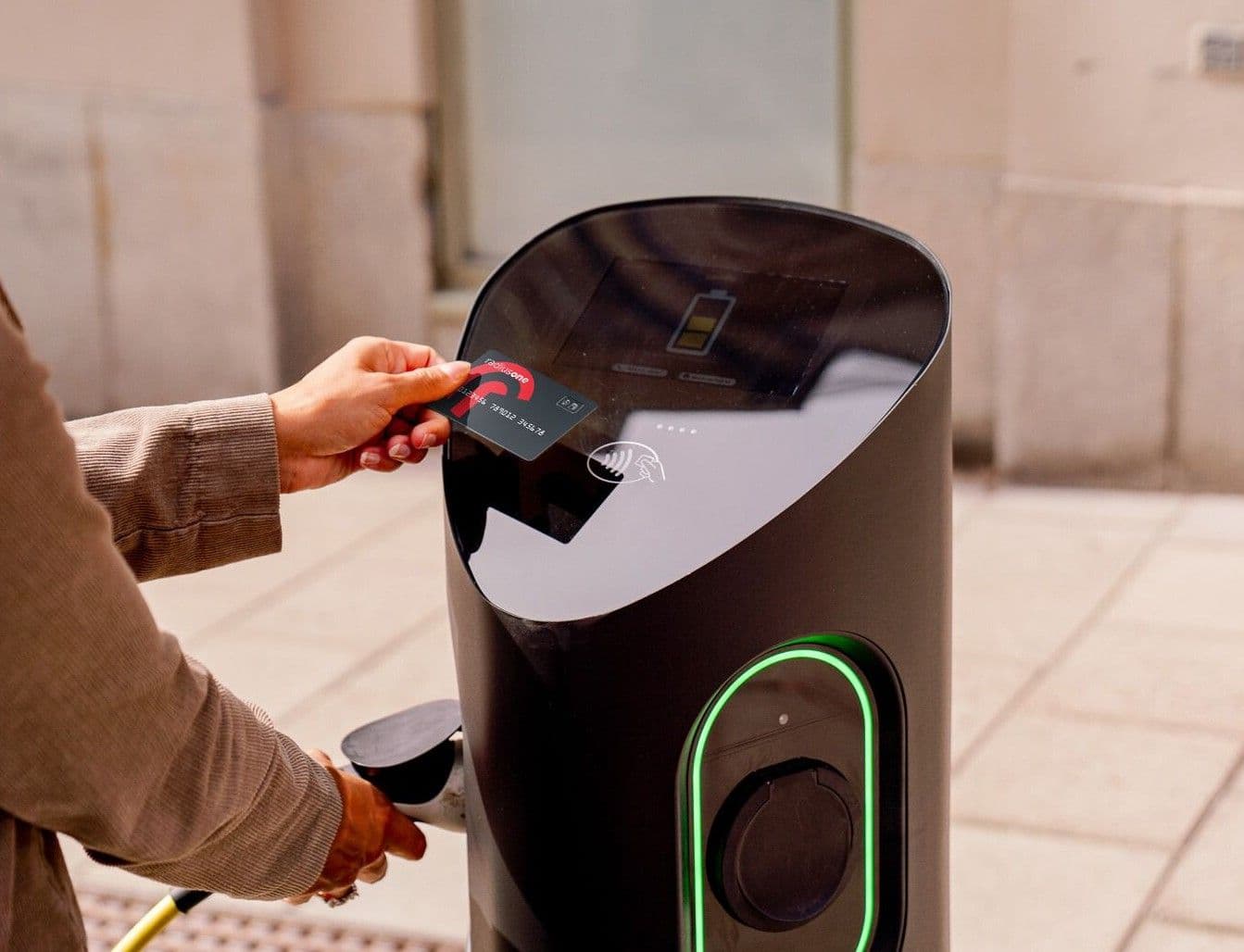
How does an EV charge card work?
1. The business opens an account and issues cards to its drivers or vehicles
2. The driver finds a compatible charge point using a network map or app
3. The driver taps the card on the charger’s RFID reader
4. The provider checks the card and authorises the session
5. The charger records the location, time, energy supplied and cost
6. The transaction is added to the linked business account
7. The business reviews the activity through its management platform
Radius One customers can use Radius Velocity to manage cards, review fuel and EV charging transactions, run reports, set alerts and access HMRC-compliant invoices. Fuel and charging transactions are consolidated into a single weekly invoice.
How to use an EV charge card
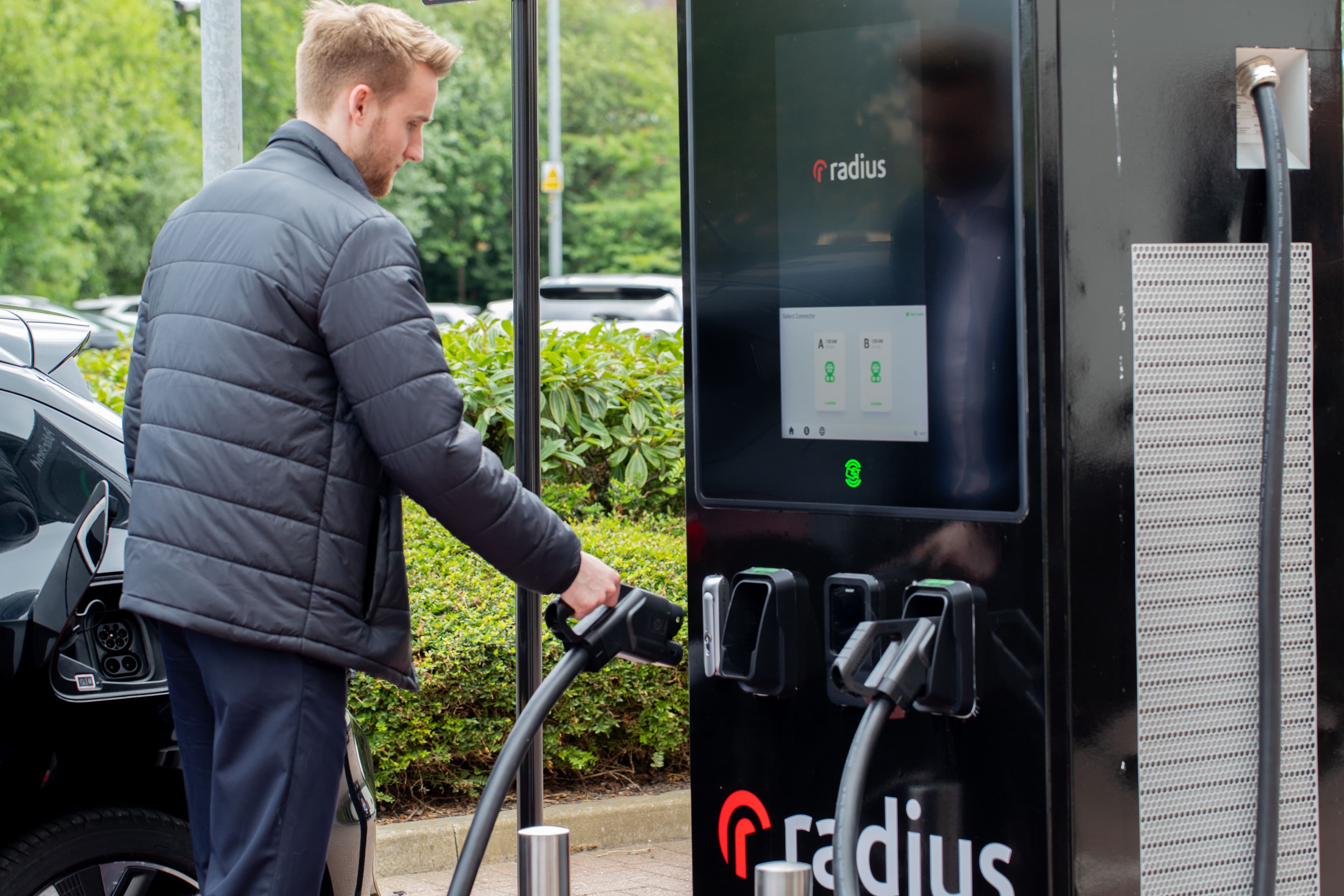
1. Find a compatible public charge point
2. Park safely and read the instructions on the charger
3. Connect the charging cable if instructed to do so
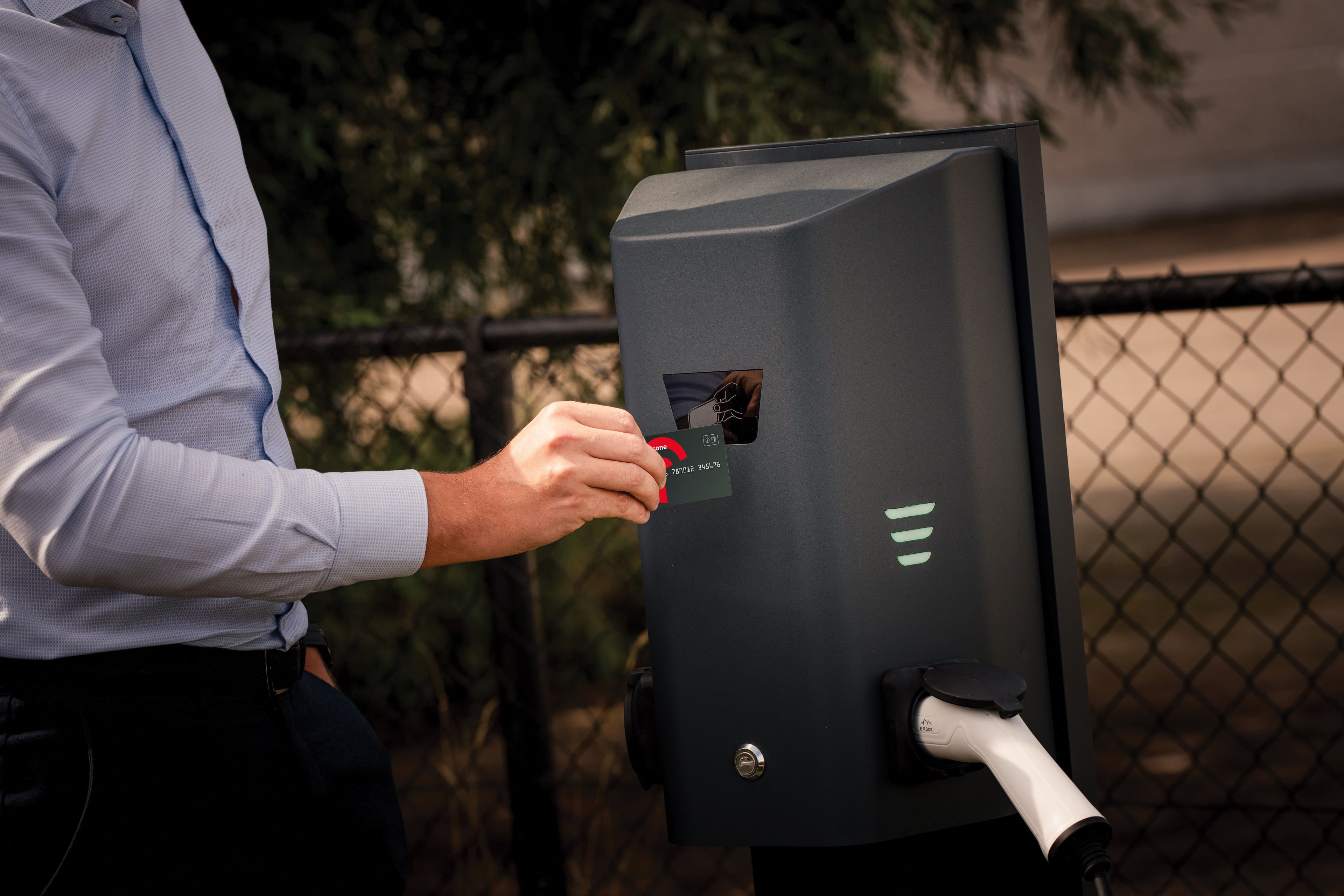
4. Locate the RFID reader. It may be different from the bank-card terminal
5. Tap the EV charge card and wait for authorisation
6. Check that charging has started before leaving the vehicle
7. Follow the on-screen steps to stop the session and disconnect
The order varies by charger. Some units ask drivers to tap before connecting. Others ask them to plug in first. Always follow the instructions displayed on the unit.
Radius e-route can help drivers find compatible EV charge points and fuel stations before or during a journey.
Do businesses need EV charge cards?
A bank card can be useful for an occasional charging session. For a fleet, the issue is not simply whether a driver can pay. The business must also manage payments, drivers, cards, invoices and charging records.
The UK’s Public Charge Point Regulations 2023 guidance explains the payment and roaming requirements that apply to publicly accessible charge points. However, paying for an individual session does not provide the account controls and consolidated billing needed to manage regular fleet charging.
An EV charge card can be valuable when:
- Employees charge company vehicles away from a depot or workplace
- Drivers regularly use public charging networks
- The business runs several EVs or a mixed fleet
- Employees currently pay and reclaim expenses
- Finance teams need centralised transaction and invoice records
- Fleet managers need better visibility of card activity and spend
Expert view
“As electric fleets grow, relying on individual payments and expense claims quickly becomes difficult to control. Radius One gives fleet managers a consistent way to manage public charging, monitor expenditure, and consolidate transactions through a single billing process. It turns charging from a series of separate driver payments into something the business can manage at fleet level.” - Matt Kirby, Managing Director for EV, Radius

Why use an EV charge card instead of a credit or debit card?
Contactless bank cards provide a quick way to pay. EV charge cards provide a business process for managing regular fleet charging. Key benefits include:
- Fewer expense claims: Drivers do not need to pay personally and request reimbursement
- Centralised records: Eligible transactions can be brought together within one business account
- Better visibility: Fleet teams can monitor activity and manage cards through dedicated tools
- Multi-network access: One card can work across several participating charging networks
- Mixed-fleet support: Radius One covers public EV charging and conventional fuel purchases
- Simpler billing: Fuel and charging transactions can be included in consolidated HMRC-compliant invoices
How can businesses manage EV charge cards?
The supporting platform is an important part of a business charge card. Useful account-management features include:
- Viewing fuel and EV charging transactions
- Monitoring spend by card or account
- Managing, blocking or reordering cards
- Downloading invoices
- Running reports and setting alerts
- Giving authorised users access to account information
Radius Velocity provides these tools for Radius customers. It gives fleet and finance teams a clearer view of charging activity without relying on employee receipts or individual bank statements.
How to choose an EV charge card for your business
- Coverage: Check for compatible charge points along regular routes and near key destinations
- Management tools: Look for card controls, reports, alerts and transaction visibility
- Billing: Check whether invoices are consolidated and HMRC-compliant
- Mixed-fleet use: Consider a combined fuel and EV card if the fleet is transitioning gradually
- Driver support: Check how drivers find chargers and get help when needed
Keep your business moving with Radius
Radius One brings public EV charging and fuel payments together on a single secure business card. Drivers gain broad network access. Fleet teams can use Radius Velocity to manage cards, monitor transactions and access invoices.
This can reduce payment friction, cut administration and provide clearer oversight as your electric or mixed fleet grows.